I replaced a template API with a small HTML-to-PNG image generator
The Projects page on this site used to describe an image pipeline built around Bannerbear. That description was out of date. I wanted to change a layout without going back to a template editor or depending on an image API, so I made a small generator that renders HTML with Chromium instead.
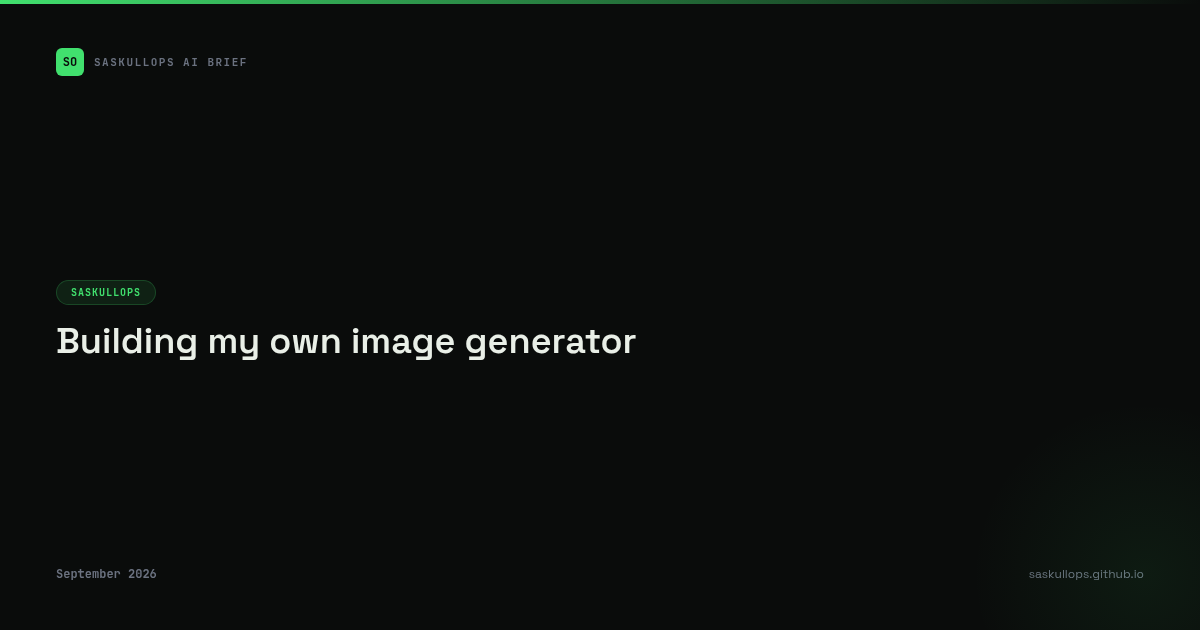
It produces newsletter headers, LinkedIn images and carousel slides. The cover of this post came out of the same script.
The part that does the work
There are three HTML templates and a Python CLI. The script fills placeholders in a template, writes a temporary HTML file and asks headless Chromium to take a screenshot. Newsletter headers and carousel slides are 1080 × 1350 pixels; the LinkedIn image is 1200 × 630.
A single image can be generated with:
1
2
3
4
5
python3 generate.py --mode linkedin \
  --edition "SaskullOps" \
  --title "Building my own image generator" \
  --date "September 2026" \
  --output brand-engine-cover.png
For a carousel, the input is a JSON array of slides. The script currently understands title, bullet, code and call-to-action slides, then renders each one as a separate PNG. The typography and colours live in CSS, where I can edit them directly.
I also added a small HTTP endpoint so an n8n workflow can request images. That integration is an entry point, not a public service: the server uses Python’s basic http.server, has no authentication and listens on all interfaces. I would not expose it to the internet as it stands. It also needs proper supervision to survive a reboot.
Why keep it this small?
I wanted control over the output and a way to generate assets locally. This does both. It also means I own the awkward bits: font installation, text that overflows a slide, and checking the result before using it. HTML-to-PNG does not decide whether a composition looks good.
The current layouts are a starting point, not a promise that every post will look different automatically. I still need to adjust the content and composition rather than feeding a new headline into the same template every time.
At least the workflow now matches how I like to work: edit the HTML/CSS, run the command, inspect the PNG, change what needs changing.